Category: Uncategorized

  • How Do I Develop a Heart Like David?

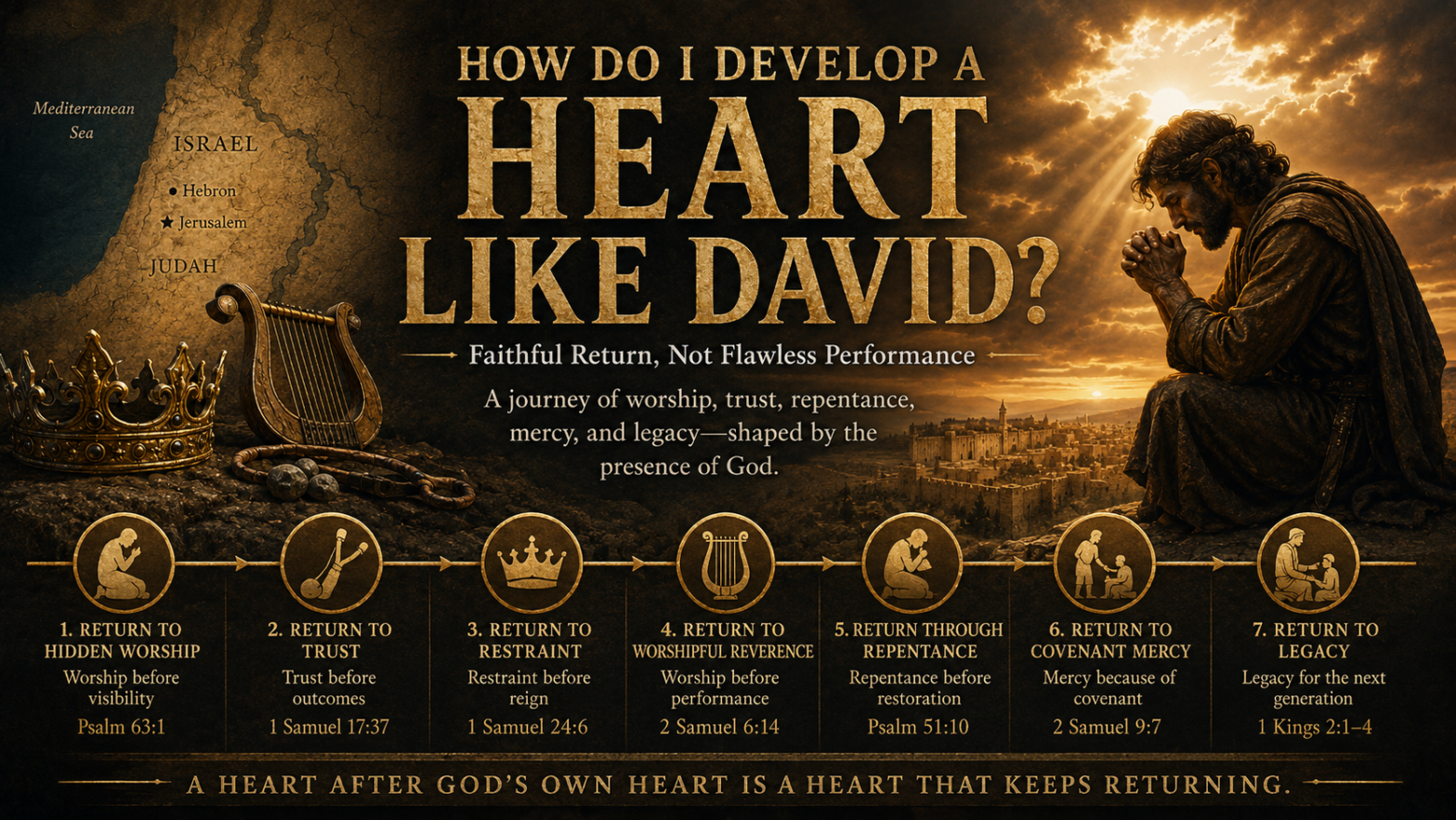
    How Do I Develop a Heart Like David?

    Faithful return, not flawless performance.

    There is a question hidden underneath almost every leadership struggle, spiritual failure, and season of exhaustion:

    How do I become the kind of person whose heart keeps returning to God?

    Not just successful.
    Not just gifted.
    Not just admired.

    But anchored.

    The life of King David forces us to confront an uncomfortable truth: God’s favorite leaders are not always the most flawless. David was courageous, worshipful, poetic, strategic, compassionate, and deeply broken. He defeated giants, united a nation, wrote songs of worship, and committed devastating sins.

    Yet Scripture still describes him as “a man after God’s own heart” (Acts 13:22).

    Why?

    Because David’s greatness was not rooted in perfection.
    It was rooted in return.

    A heart like David’s is not flawless. It is a God-returning heart.

    Like a great bassist who resets the groove when the rhythm drifts, David kept returning to God’s presence when his soul drifted off tempo. His life teaches us that spiritual maturity is not measured by never falling. It is measured by how honestly, humbly, and quickly we return.

    The Leadership Crisis Beneath the Surface

    Many leaders today are succeeding publicly while drifting privately.

    Their calendars are full.
    Their influence is growing.
    Their platforms are expanding.

    But their inner lives are thinning.

    The modern world rewards visibility, speed, certainty, and image management. Yet David’s life reveals that God often develops leaders in hiddenness before visibility.

    Before David wore a crown, he learned worship in isolation.
    Before he led armies, he learned trust in obscurity.
    Before he governed Israel, he learned dependence in the wilderness.

    The real danger for modern leaders is not failure alone.
    It is influence growing faster than intimacy.

    That is the question every Christian executive, pastor, entrepreneur, parent, and disciple must eventually ask:

    Is my influence growing faster than my intimacy with God?

    Silence, Formation, and the Hidden Work of God

    One of the greatest misconceptions in spiritual leadership is assuming that God is absent when progress feels delayed.

    But throughout Scripture, silence is often preparation.

    The hidden years of David’s shepherding were not wasted years. God was building courage, discernment, restraint, and worship before public assignment.

    That same pattern appears throughout the Bible and throughout history.

    God forms people in hidden places before visible platforms.

    The silence is not empty.
    The silence is strategic.

    Many leaders panic during seasons of uncertainty because neuroscience tells us that the brain interprets ambiguity as danger. Under pressure, the amygdala increases threat scanning. Leaders become reactive, impatient, controlling, or emotionally exhausted.

    But David repeatedly returned to practices that regulated his soul:

    • worship,
    • prayer,
    • inquiry,
    • repentance,
    • reflection,
    • and dependence on God.

    David teaches us that sustainable leadership begins with regulated spiritual rhythms.

    My Own Journey Through Losing Balance

    I understand this personally.

    Several years ago, my life changed overnight.

    A severe vertigo event left me unable to walk on my own. I lost 86% capability in my right inner ear. Suddenly, I lost my physical balance… and, for a season, my emotional and spiritual balance.

    And when your balance disappears, clarity becomes everything.

    I remember asking myself:

    “Will this be the rest of my life?”

    During that season, I discovered something powerful:

    The brain can adapt.
    People can recover.
    And our systems can improve.

    That crisis pushed me into deep soul-searching and intensive study of the bible, neuroscience, epigenetics, kinesiology, whole-brain learning, and accelerated learning. I spent years walking, praying, reflecting, and asking painful questions:

    How did I lose balance in my life?
    How did my marriage collapse?
    How did I drift emotionally while battling a brain injury?

    Eventually, I made a decision:

    I would grow through vertigo instead of simply going through it.

    I chose to become better, not bitter.

    When I lost my balance, I had to rebuild my life one step at a time. With the help of mentors, coaches, faith, prayer, and relentless intentionality, I slowly regained stability.

    Today, I often tell leaders:

    Clarity changes everything.

    My wife entered my life during a season when I had very little to offer except honesty, faith, and a willingness to heal. That experience taught me something David also learned:

    God does some of His deepest work when our self-sufficiency collapses.

    As my mentor Les Brown says:

    “When you fall, fall on your back, because if you can look up, you can get up.”

    David understood that principle deeply.

    David’s Secret Was Return

    David’s life can be understood through what I call the Seven Davidic Returns.

    These are not merely spiritual concepts. They are leadership rhythms.

    1. Return to Hidden Worship

    David learned worship before visibility.

    Long before anyone applauded him, he cultivated intimacy with God in the fields.

    Modern leaders often reverse the order:

    • platform before formation,
    • visibility before integrity,
    • influence before surrender.

    A heart like David begins in secret.

    Practice

    Begin each day with worship before work.

    Question

    Who am I becoming when no one is watching?

    2. Return to Trust

    When Israel saw Goliath, they saw impossibility.

    David saw God’s faithfulness.

    Fear magnifies obstacles. Faith remembers history.

    Practice

    Before solving the problem, remember where God has already carried you.

    Question

    Am I interpreting this challenge through fear or faith?

    3. Return to Restraint

    One of David’s greatest victories was not killing Saul when he had the chance.

    Power without restraint destroys leaders.

    Modern culture celebrates aggressive ambition, but David teaches us that spiritual maturity includes waiting for God’s timing.

    Practice

    Refuse shortcuts that violate integrity.

    Question

    Am I trying to take what God has not yet given?

    4. Return to Worshipful Reverence

    David danced before the Ark because worship mattered more than image.

    Many leaders worship success while talking about God.

    David worshiped God even when it cost him dignity.

    Practice

    Worship until God becomes bigger than the assignment again.

    Question

    Is my worship about God’s glory or my image?

    5. Return Through Repentance

    David’s sin with Bathsheba and the murder of Uriah the Hittite reveal something terrifying:

    Anointing does not remove vulnerability.

    David needed Nathan.

    Every leader still does.

    The difference between Saul and David was not that David sinned less. It was that David repented honestly.

    Psalm 51 remains one of the greatest prayers of repentance ever written because David stopped managing reputation and started confronting reality.

    Practice

    Confess quickly. Repair honestly.

    Question

    Where am I defending what God is asking me to confess?

    6. Return to Covenant Mercy

    David honored Mephibosheth because he remembered his covenant with Jonathan.

    Modern leadership often evaluates people by usefulness.

    David remembered covenant over convenience.

    Practice

    Show dignity to someone who cannot repay you.

    Question

    Who needs kindness because I remember the covenant?


    7. Return to Legacy

    Near the end of his life, David charged Solomon to walk faithfully before the Lord.

    A heart like David thinks generationally.

    Leadership is not simply about achievement.
    It is about transfer.

    Practice

    Turn your lessons into guidance for others.

    Question

    What am I teaching the next generation about walking with God?

    How to Practice Lectio Divina, Like David

    One of the most powerful ways to develop a heart like David’s is through slow, reflective Scripture meditation.

    This ancient practice is called Lectio Divina — “divine reading.”

    It is not speed-reading the Bible for information.
    It is allowing Scripture to read you.

    Step 1 — Lectio (Read)

    Choose a passage slowly.

    Read it multiple times using translations like:

    Suggested passages:

    • Psalm 23
    • Psalm 51
    • 1 Samuel 17
    • 2 Samuel 9

    Pay attention to words or phrases that stand out.

    Step 2 — Meditatio (Reflect)

    Ask:

    • What is God revealing about Himself?
    • What is this passage revealing about me?
    • Where do I see myself in David’s story?

    This is where Scripture becomes personal.

    Step 3 — Oratio (Pray)

    Turn the passage into a conversation.

    Example:

    “Lord, create in me a clean heart like David prayed in Psalm 51. Teach me to return quickly when I drift.”

    Step 4 — Contemplatio (Listen)

    Sit quietly.

    Release the need to perform spiritually.

    Listen.

    David often paused before God before acting publicly. Leaders today must relearn that discipline.

    The Tabernacle Prayer as a Leadership Rhythm

    The Tabernacle Prayer offers another practical framework for cultivating a heart like David’s.

    It walks symbolically through the Old Testament Tabernacle as a prayer journey.

    A Simple Daily Pattern

    1. Altar of Sacrifice — Gratitude for Salvation

    “Lord, thank You for Your grace and mercy.”

    Screenshot

    2. Bronze Basin — Cleansing

    “Search my heart and reveal anything I need to confess.”

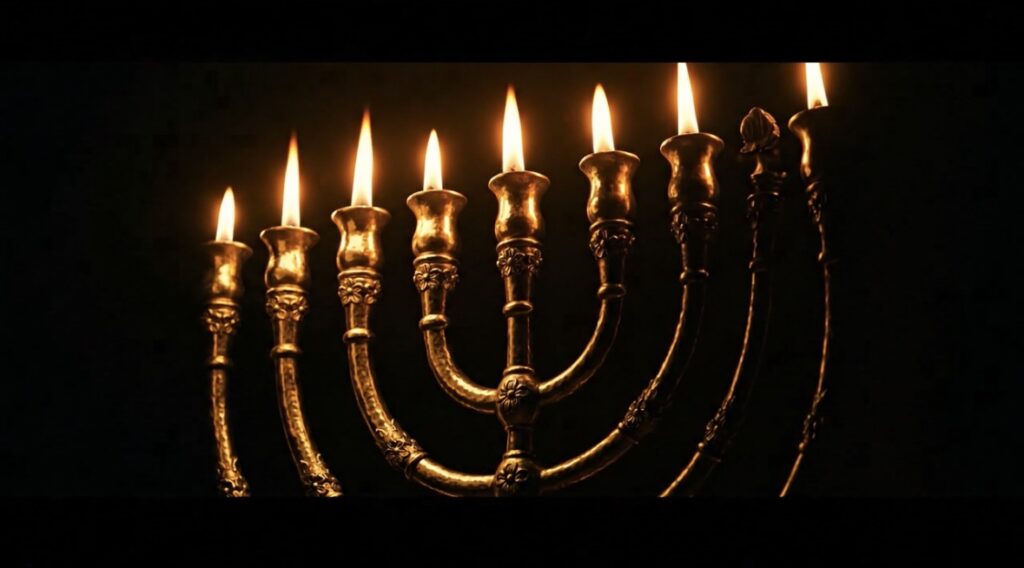
    3. Golden Lampstand — Guidance

    “Holy Spirit, illuminate my thinking and leadership.”
    Screenshot

    4. Table of Bread — God’s Word

    “Feed me with truth before I feed others.”

    5. Altar of Incense — Worship

    “Let my life become worship, not performance.”

    Screenshot

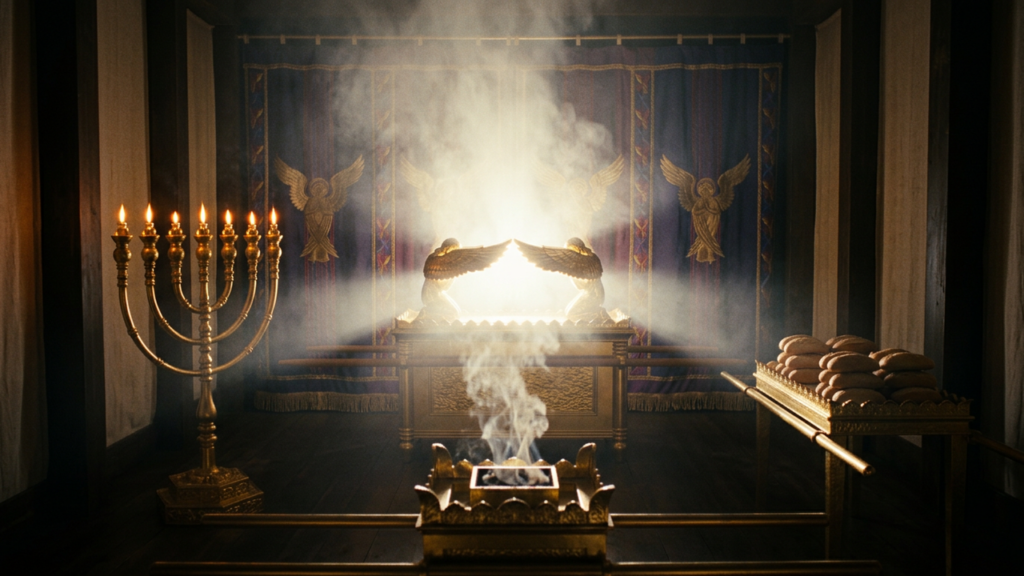
    6. Ark of the Covenant — Presence

    “Lord, I want Your presence more than success.”
    This kind of prayer reshapes leadership from the inside out.

    Prayer keeps leadership from becoming self-referential. It re-centers the leader under God’s kingship.

    Presence Leadership vs. Platform Leadership

    One of the greatest lessons from David’s life is the difference between platform leadership and presence leadership.

    Platform leadership asks:

    “How high can I rise?”

    Presence leadership asks:

    “How close can I stay to God?”

    That distinction changes everything.

    Because eventually:

    • talent alone runs out,
    • charisma fades,
    • pressure exposes character,
    • and public image cannot sustain a fractured soul.

    David’s life reminds us that God is not searching for flawless people.

    He is searching for returning hearts.

    Final Reflection

    To develop a heart like David’s, we must stop defining spiritual maturity as flawless performance and begin practicing faithful return.

    David teaches us:

    • to worship before visibility,
    • trust before outcomes,
    • restrain ambition before timing,
    • repent before defending ourselves,
    • show mercy after success,
    • and leave a spiritual legacy before leaving an influence.

    A great bassist does not rush when the room gets loud. He listens for the groove, resets the tempo, and brings the band back into alignment.

    Leadership works the same way.

    When pressure rises, the leader’s job is not simply to move faster.
    The leader’s job is to return to God before the wrong note becomes the strategy.

    And that is the secret of a heart like David.

    Reference Books:

    Richard N. Longenecker, ed. —  “Into God’s Presence: Prayer in the New Testament.”

    Andrew Murray — “Let Us Draw Nigh!”

    Adamson and Brooks —  “Practicing the Presence of God.”

    Randy Clark —  “There Is More!”
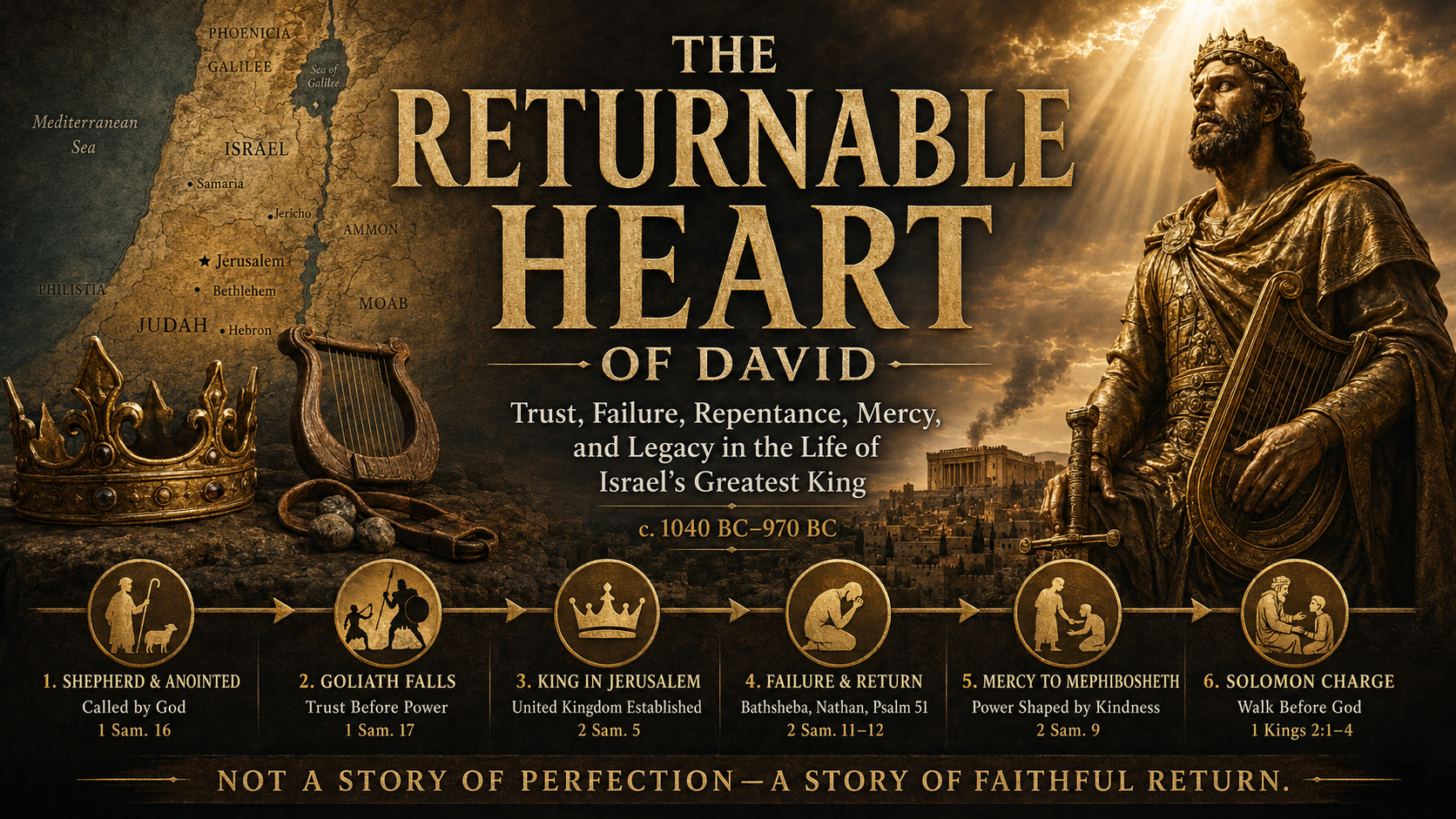
  • David’s Leadership Secret Wasn’t Perfection. It Was Return.

    David’s Leadership Secret Wasn’t Perfection. It Was Return.

    What Israel’s greatest king teaches leaders about trust, failure, repentance, mercy, and legacy

    By Gerald J. Leonard

    The greatest leadership stories rarely begin with perfection.

    They begin with calling.

    A shepherd is overlooked in the field.
    A young man faces a giant.
    A fugitive refuses to kill the king who is hunting him.
    A warrior becomes king.
    A worshiper writes songs that still give language to grief, praise, fear, repentance, and hope.

    That is the story of David.

    But David’s life cannot be understood through Goliath alone.

    To understand David, we must also sit with Bathsheba, Uriah, Nathan, Mephibosheth, Absalom, Psalm 40, Psalm 51, and Solomon.

    David was not a man after God’s heart because he never failed.

    David was a man after God’s heart because his heart kept returning to God.

    That distinction matters enormously for leaders today.

    Many leaders know how to win publicly. Fewer know how to remain spiritually grounded privately. Many know how to perform under pressure. Fewer know how to repent when pressure exposes what is hidden. Many know how to build a platform, a company, a ministry, or a reputation. Fewer know how to pass on a way of walking with God.

    David’s leadership secret was not perfection.

    It was faithful return.

    The Returnable Heart Beneath the Crown

    The slide that inspired this study summarizes David’s life around three powerful biblical anchors:

    Psalm 40:1–17 — David trusted God, waited on God, praised God, and cried out for mercy.

    Acts 13:22 — David is described as a man after God’s own heart.

    1 Kings 2:1–4 — David instructs Solomon to walk before God, keep His commands, and lead faithfully.

    Together, these passages create a leadership portrait that is both inspiring and sobering.

    David trusted God alone.
    David knew God would be faithful.
    David was not perfect.
    David learned to turn back to God again and again.
    David instructed the next generation to walk before the Lord.

    That is the heartbeat of faithful leadership.

    Not flawless performance.
    Not polished image.
    Not constant victory.
    Not unchecked power.

    A returnable heart.

    What Was

    David looked like the ideal king.

    He had courage.
    He had charisma.
    He had military strength.
    He had poetic depth.
    He had musical gifting.
    He had public influence.
    He had covenant promise.
    He had national authority.

    Under David, Israel experienced consolidation, military victories, Jerusalem’s rise as the royal city, and a kingdom identity that would shape Israel’s future imagination.

    But beneath the crown was a deeper truth:

    David’s greatness was never merely political.

    It was spiritual.

    Psalm 40 reveals the inner life behind the public leader. David remembers being lifted from the pit. He speaks of God steadying his steps. He celebrates a new song. He declares God’s faithfulness publicly. He confesses that his troubles and sins are too many to count. He ends not in self-sufficiency, but dependence: God is his helper and savior.

    This is the first major leadership insight:

    David’s authority was strongest when his dependence was deepest.

    The leader before the throne was formed in the field, in the cave, in worship, in danger, in waiting, and in prayer.

    David’s public courage was built on private dependence.

    What Could Be

    David’s story invites leaders into a different model.

    What is:

    • performance without formation
    • visibility without vulnerability
    • success without watchfulness
    • influence without accountability
    • repentance replaced by reputation management
    • legacy reduced to achievement

    What could be:

    • trust before authority
    • worship beneath responsibility
    • courage joined to humility
    • correction received as grace
    • repentance before image repair
    • power used for mercy
    • obedience passed to the next generation

    This is why David still speaks to Christian executives, ministry leaders, entrepreneurs, fathers, mothers, teachers, and serious students of Scripture.

    David’s life is not merely ancient history.

    It is diagnostic literature.

    It helps us ask: What is happening beneath the visible success?

    Trust Before the Throne

    Psalm 40 begins with waiting.

    David says he waited patiently for the Lord.

    That line is easy to read quickly and hard to live faithfully.

    Waiting is not passive when it is rooted in trust. David does not say, “I solved my own way out of the pit.” He says God turned to him, heard him, lifted him, steadied him, and gave him a new song.

    This is not the language of ego.

    It is the language of dependence.

    That matters because many leaders want authority before formation. They want the throne before the trust. They want the Goliath moment before the hidden obedience that prepares them for it.

    David teaches the opposite.

    Before David ruled Israel, he learned to trust God in obscurity.

    Before he carried a crown, he carried responsibility in the field.

    Before he led a nation, he learned to worship when no crowd was watching.

    That is the first movement of faithful return leadership:

    Private dependence prepares public authority.

    Leaders who do not learn dependence in hidden places can become dangerous when they receive visible power.

    A Man After God’s Heart Was Still a Man Who Needed Mercy

    Acts 13:22 gives one of the most famous summaries of David’s life: God found David to be a man after His own heart.

    But we must be careful.

    That phrase does not mean David was morally flawless.

    The biblical story itself will not allow that interpretation. David’s life includes catastrophic failure, abuse of power, deception, violence, family breakdown, grief, and painful consequences.

    So what does it mean?

    It means David’s heart was fundamentally Godward.

    He could be confronted.
    He could be corrected.
    He could be broken.
    He could repent.
    He could worship.
    He could return.

    That is the difference between a polished image and a responsive heart.

    A leader after God’s heart is not a leader who never needs correction. It is a leader who does not harden when correction comes.

    David’s heart was not flawless.

    But it was returnable.

    The Promise Beneath the Performance

    David’s life must also be read in light of 2 Samuel 7.

    God makes covenant promises to David. His house, kingdom, and throne become part of the great biblical movement that points forward to the Messiah.

    That means David’s life is not merely a leadership lesson. It is part of God’s redemptive story.

    John Woodhouse’s kingdom framework is helpful here. David’s reign matters because it reveals God’s purpose, but David’s failures matter because they reveal the limits of human kingship. David is great, but not ultimate. David is chosen, but still needy. David points beyond himself.

    This gives us the deeper theological insight:

    David’s story is held together by God’s faithfulness, not David’s perfection.

    God calls David.
    God delivers David.
    God promises David.
    God corrects David.
    God forgives David.
    God disciplines David.
    God continues His purpose through David’s line.

    That is why David’s life gives hope without becoming sentimental.

    God does not need flawless people to fulfill His purposes.

    But He does form people who are willing to return.

    Success Without Humility Becomes Dangerous

    David’s greatest failure does not happen when he is young, overlooked, or hunted.

    It happens when he is established.

    That should sober every leader.

    David does not fall when he is facing Goliath.
    He does not fall when Saul is chasing him.
    He does not fall when he is living under pressure in the wilderness.

    His most devastating collapse comes when he has power.

    The story of Bathsheba and Uriah is not a minor mistake. It is a catastrophic abuse of authority. David uses power to take, hide, manipulate, and destroy.

    This is one of Scripture’s clearest warnings about leadership drift.

    Power does not remove temptation.
    Power can magnify unattended weakness.

    Success can reduce feedback.
    Authority can expand permission.
    Isolation can dull discernment.
    Image protection can become more tempting than truth.

    In modern leadership language:

    • platform can hide private erosion
    • achievement can mask spiritual drift
    • influence can weaken accountability
    • pressure can rationalize compromise
    • power can turn desire into damage

    This is the David story we must not skip.

    If we only teach David and Goliath, we may inspire courage.

    But if we ignore David and Bathsheba, we fail to warn leaders about the danger of success without humility.

    Every David Needs a Nathan

    Nathan’s confrontation is one of the most important leadership moments in Scripture.

    David needed a truth-teller.

    That sentence alone is a leadership principle.

    No leader becomes too gifted for correction.
    No leader becomes too successful for accountability.
    No leader becomes too spiritual to need someone who can speak the word of God into hidden places.

    Nathan interrupted David’s concealment.

    Without Nathan, David’s sin could have hardened.
    Without Nathan, David’s power could have protected his deception.
    Without Nathan, David’s heart could have drifted further from God.

    This is why faithful leaders need what I call a Nathan circle.

    A Nathan circle is not a group of admirers.
    It is not a group that only affirms your talent.
    It is not a group that protects your brand at the expense of truth.

    A Nathan circle is made of people who love God, love you, and love truth enough to confront drift before it becomes destruction.

    Every David needs a Nathan before the kingdom pays the price.

    Repentance Is Not Reputation Repair

    David’s repentance is one of the clearest marks of his returnable heart.

    He does not merely manage the crisis.
    He does not only protect the throne.
    He does not simply craft a public statement.
    He turns toward God.

    Psalm 51 gives language to this kind of repentance, but Psalm 40 also shows the same pattern of dependence and need. David can praise God’s deliverance and still admit that his sins and troubles are overwhelming.

    That honesty matters.

    Many leaders confuse apology with repentance.

    An apology may be strategic.
    Repentance is spiritual.

    An apology may protect reputation.
    Repentance returns to God.

    An apology may focus on consequences.
    Repentance focuses on the condition of the heart.

    David’s repentance does not erase the damage. It does not remove every consequence. It does not make his failure small.

    But it does reveal that his heart is still responsive to God.

    That is why repentance is central to faithful leadership.

    The question is not only, “Will I ever fail?”

    The deeper question is:

    When I fail, will I hide or return?

    Power Under God Becomes Mercy

    David’s story is not only failure and repentance.

    It is also mercy.

    The story of Mephibosheth in 2 Samuel 9 reveals a different side of David’s leadership. David remembers his covenant with Jonathan and shows kindness to someone vulnerable, politically inconvenient, and easily forgotten.

    This is power under God.

    David could have erased Mephibosheth.
    He could have ignored him.
    He could have treated him as a threat.
    Instead, he restored dignity.

    That story matters because it shows what authority can become when shaped by covenant mercy.

    Power under God does not merely protect itself.
    It restores others.

    This is one of the clearest leadership contrasts in David’s life.

    With Bathsheba and Uriah, power becomes danger.
    With Mephibosheth, power becomes mercy.

    That contrast is still relevant.

    The test of leadership is not only what we build.

    It is how we treat people who cannot advance our agenda, strengthen our platform, or protect our image.

    Godly authority remembers the vulnerable.

    Worship as the Inner Operating System

    David’s music was not decorative.

    It was formative.

    David’s psalms reveal the inner operating system of a leader who processed life with God. He lamented. He praised. He confessed. He thanked. He waited. He asked for rescue. He remembered deliverance.

    This is one reason David’s life speaks so deeply to modern leaders.

    Leadership pressure produces emotional weight.
    Responsibility creates fatigue.
    Success brings temptation.
    Failure brings shame.
    Conflict brings fear.
    Legacy brings burden.

    David teaches us that leaders need more than strategy.

    They need worship.

    Worship is not escape from leadership responsibility. It is one of the ways the heart is formed to carry responsibility without being consumed by it.

    Private worship shapes public resilience.

    Achievement Builds a Record; Obedience Builds a Legacy

    The image ends with 1 Kings 2:1–4, and that is significant.

    David is near death. Solomon is about to inherit the throne. David’s final instruction is not merely political. It is covenantal.

    He tells Solomon to be strong.
    To observe God’s requirements.
    To follow God’s ways.
    To keep God’s commands.
    To walk faithfully with all his heart and soul.

    David does not simply tell Solomon how to rule.

    He tells him how to walk.

    That may be David’s final leadership lesson.

    Legacy is not only what people remember about you. It is what continues faithfully after you.

    David had victories.
    David had influence.
    David had songs.
    David had failures.
    David had grief.
    David had promises.

    But at the end, he wanted Solomon to understand the central issue:

    Walk before God.

    That is the difference between achievement and legacy.

    Achievement builds a record.

    Obedience builds a legacy.

    The Neuroscience of Leadership Drift

    One reason David’s story feels so modern is that it aligns with what we observe in leadership behavior under pressure.

    When leaders experience success, pressure, or threat, several things can happen.

    Feedback decreases.
    People become less willing to speak honestly.

    Permission expands.
    The leader begins to believe the rules are flexible.

    Identity becomes fragile.
    Failure feels like a threat to the self, not merely a mistake to correct.

    Image protection increases.
    The leader works harder to preserve perception than to seek truth.

    That is how drift becomes dangerous.

    David’s life interrupts this cycle.

    Nathan restores truth.
    Repentance restores humility.
    Worship restores dependence.
    Mephibosheth restores mercy.
    Solomon restores legacy.

    This is the productivity and leadership insight:

    Sustainable leadership is not only about managing time. It is about managing the heart under pressure.

    A leader can be productive and still be spiritually drifting.

    A leader can be efficient and still be unformed.

    A leader can scale results and still lose the sensitivity that made the assignment sacred.

    David warns us that success without humility can become a throne of danger.

    But David also shows us that return is possible.

    The Leadership Framework of the Returnable Heart

    David’s life can be understood through seven movements of faithful return.

    1. Trust Before Visibility

    David’s pattern: He trusted God before he had the throne.
    Leadership lesson: Do not wait for authority to build dependence.

    2. Worship Beneath Responsibility

    David’s pattern: He prayed, sang, lamented, and praised.
    Leadership lesson: Worship forms the leader under pressure.

    3. Vigilance in Power

    David’s pattern: His greatest failure came after success.
    Leadership lesson: The higher you rise, the more accountability you need.

    4. Correction Through Truth

    David’s pattern: Nathan confronted him.
    Leadership lesson: Every leader needs truth-tellers.

    5. Repentance Over Reputation

    David’s pattern: He returned to God.
    Leadership lesson: Repentance is not reputation repair; it is soul return.

    6. Mercy With Authority

    David’s pattern: He restored Mephibosheth.
    Leadership lesson: Power under God becomes mercy.

    7. Obedience as Legacy

    David’s pattern: He charged Solomon to walk before God.
    Leadership lesson: Achievement builds a record; obedience builds a legacy.

    The Executive Reframe

    David’s story creates a clear contrast for modern leaders.

    Performance Leadership

    Performance leadership protects image.
    It hides weakness.
    It explains failure.
    It uses power for control.
    It measures achievement.
    It transfers success.
    It builds reputation.

    Faithful Return Leadership

    Faithful return leadership returns to God.
    It receives correction.
    It confesses failure.
    It uses power for mercy.
    It measures faithfulness.
    It transfers obedience.
    It builds legacy.

    This is the central distinction.

    The modern leadership problem is not only that leaders fail.

    The deeper problem is that many leaders do not know how to return.

    They know how to explain.
    They know how to reposition.
    They know how to protect the brand.
    They know how to keep moving.

    But David shows another way.

    The most important leadership move after failure is not optics.

    It is return.

    Practicing Faithful Return

    David’s life gives us more than inspiration. It gives us a pattern.

    1. Audit your source of confidence

    Ask:

    Where am I trusting my title, talent, money, reputation, intelligence, strategy, or control more than God?

    2. Write a Psalm 40 remembrance list

    Write down three times God delivered, redirected, protected, or sustained you.

    Then ask:

    Where do I need to wait on the Lord now?

    3. Build a Nathan circle

    Choose one or two trusted people who have permission to tell you the truth.

    Ask them:

    Where do you see drift in me that I may not see?

    4. Practice confession without explanation

    When you fail, start with:

    “I was wrong.”

    Do not lead with context, defense, blame, or justification.

    5. Choose one Mephibosheth act of mercy

    Ask:

    Who has been forgotten, weakened, overlooked, or pushed aside that my influence could help restore?

    6. Write your Solomon charge

    Write one page to your children, team, mentees, or future leaders.

    Answer:

    What does it mean to walk before God?

    7. Redefine legacy

    Ask:

    Am I building only a record of achievement, or am I transferring a pattern of obedience?

    The Final Leadership Insight

    David’s life is not a call to admire greatness from a distance.

    It is a call to examine the condition of the heart under pressure.

    The same David who faced Goliath also failed with Bathsheba.
    The same David who sinned also repented.
    The same David who ruled also worshiped.
    The same David who received mercy also showed mercy.
    And the same David who built a kingdom told Solomon that the real assignment was to walk before God.

    That is the leadership lesson.

    Not perfection.
    Not image.
    Not power.
    Not performance.

    Faithful return.

    David’s heart was not flawless.

    But it was returnable.

    And for every leader who has ever won, failed, hidden, confessed, rebuilt, or wondered whether God can still use them, that may be one of the most hopeful truths in Scripture.

    God is not looking for polished leaders with perfect records.

    He is forming leaders with returnable hearts.

    Scriptures to Study

    • Psalm 40:1–17
    • Acts 13:22
    • 1 Kings 2:1–4
    • 1 Samuel 16:11–13
    • 1 Samuel 17
    • 2 Samuel 7
    • 2 Samuel 9
    • 2 Samuel 11–12
    • Psalm 51
    • 2 Samuel 22–23

    Books Used in Research

    • Beck, Kenny. 2023. Lessons from the Life of David. The No-Prep Bible Study Series. Kenny Beck.
    • Woodhouse, John. 2015. 2 Samuel: Your Kingdom Come. Edited by R. Kent Hughes. Preaching the Word. Wheaton, IL: Crossway.
    • Lawson, George. 1833. Discourses on the History of David; and On the Introduction of Christianity into Britain. Berwick: Thomas Melrose.
    • Wiersbe, Warren W. 2015. 1 Kings: Being Good Stewards of God’s Gifts. Wiersbe Bible Study Series. Colorado Springs, CO: David C Cook.

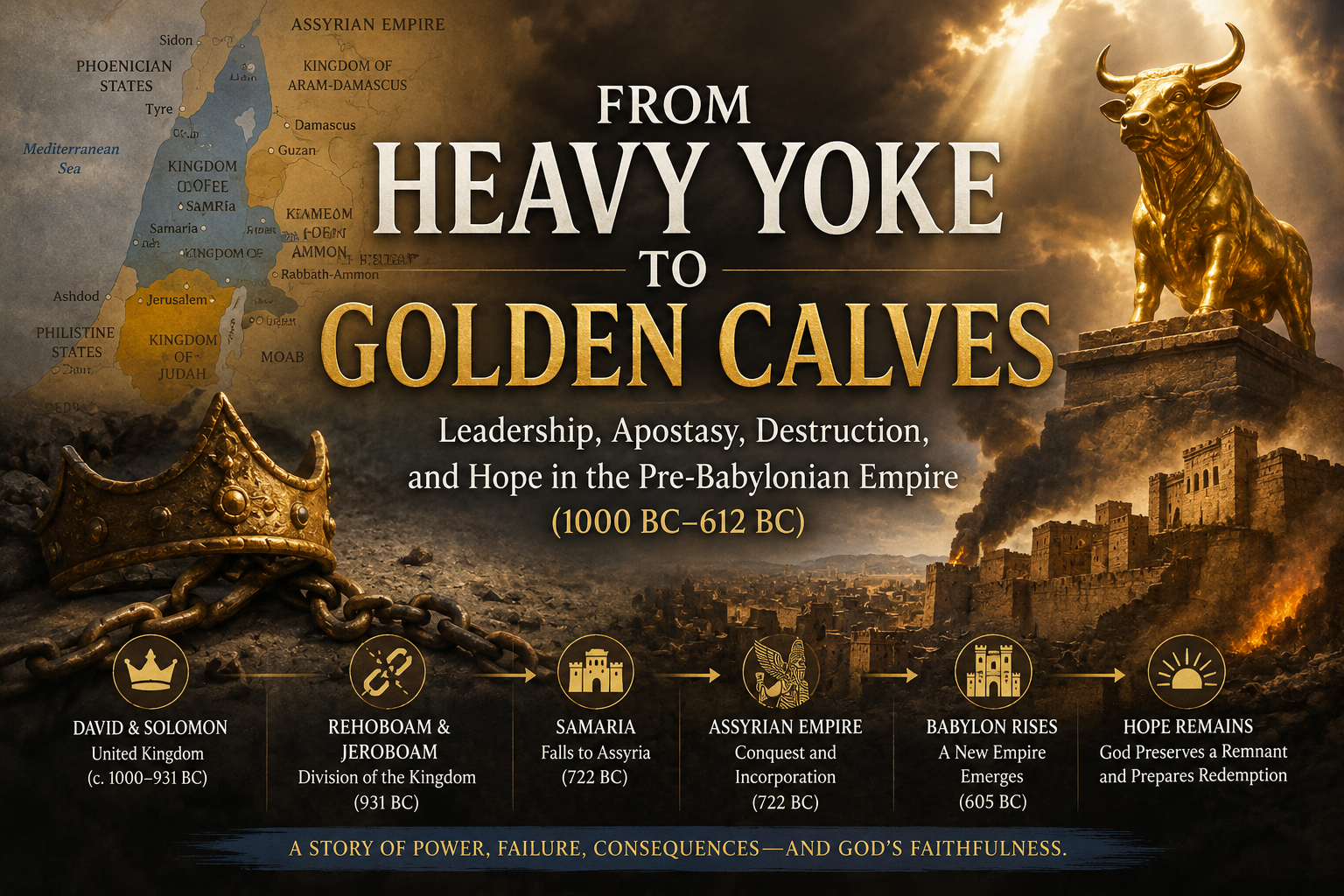
  • From Heavy Yoke to Golden Calves

    From Heavy Yoke to Golden Calves

    Leadership, Apostasy, Destruction, and Hope in the Pre-Babylonian Empire (1000 BC–612 BC)

    By Gerald J. Leonard

    The greatest leadership failures rarely begin with collapse.

    They begin with compromise.

    A kingdom still looks prosperous. Institutions still function. The temple still stands. The economy appears strong. The leaders still speak confidently. Yet beneath the visible success, something foundational has already begun to fracture.

    That is the story of Israel during the Pre-Babylonian Empire period.

    From the united monarchy of Solomon to the destruction of Samaria by Assyria in 722 BC and the looming fall of Judah before Babylon, the biblical narrative reveals a sobering pattern: nations rarely fall suddenly. They decay internally long before they collapse externally.

    This period is not merely ancient political history. It is a leadership case study in covenant failure, organizational drift, oppressive systems, fear-based governance, and the long-term consequences of compromised worship.

    And yet, woven through apostasy and judgment is another thread: hope.

    The God who judges covenant unfaithfulness also preserves a remnant, raises prophetic voices, and continues preparing redemption in the midst of collapse.

    That tension—between destruction and hope—is the heartbeat of 1–2 Kings, the prophets, and the intertestamental story that follows.

    The Leadership Crisis Beneath the Prosperity

    Transformational communication moves between two realities:

    • What is
    • What could be

    The Pre-Babylonian kingdom narrative lives inside that contrast.

    What Was

    Israel looked powerful.

    Under David and Solomon, the kingdom possessed:

    • military strength
    • economic expansion
    • international influence
    • architectural achievement
    • centralized administration
    • religious prestige

    But beneath the appearance of strength, covenant erosion had already begun.

    Solomon’s failure was not primarily strategic incompetence. It was a spiritual compromise.

    The biblical narrative in 1 Kings 11 presents Solomon’s idolatry as the deep fracture beneath the political surface. His divided heart weakened the covenant foundation of the kingdom long before the kingdom visibly divided.

    This is the first major insight from my research and reading the reference books for this study.

    The kingdom was spiritually divided before it was politically divided.

    That distinction matters enormously for leadership.

    Organizations, families, ministries, and nations often appear healthy long after their core values have begun eroding.

    Visible success can mask invisible decay.

    The Heavy Yoke: When Leadership Becomes Oppression

    The fracture becomes visible in 1 Kings 12.

    After Solomon’s death, the northern tribes came to Rehoboam with a request:

    “Lighten the harsh labor and the heavy yoke your father put on us.”

    This moment is pivotal.

    The people are not demanding revolution.
    They are asking for relief.

    That detail changes the entire interpretation of the kingdom’s division.

    The research readings correctly identify this as more than political dissatisfaction. The “heavy yoke” language echoes Israel’s memory of bondage in Egypt.

    The ESV Global Study Bible insight is especially powerful here:

    Israel, once liberated from Pharaoh’s oppression, now feels burdened under its own monarchy.

    This becomes a profound leadership warning:

    A system originally designed to serve people can slowly become a system that consumes them.

    In modern leadership language:

    • productivity becomes exploitation
    • growth becomes pressure
    • scale becomes bureaucracy
    • authority becomes coercion
    • performance becomes identity

    The organization still produces results, but people begin carrying a “heavy yoke.”

    And when leaders stop listening to burdened people, rupture becomes inevitable.

    Rehoboam and the Failure of Servant Leadership

    Rehoboam’s leadership test is one of the clearest executive decision moments in Scripture.

    He receives two competing leadership philosophies.

    The Elders’ Advice

    Serve the people.
    Speak kindly.
    Earn loyalty through humility.

    The Younger Advisers’ Advice

    Assert dominance.
    Increase pressure.
    Rule through intimidation.

    Rehoboam chooses intimidation.

    Rehoboam completely misreads the audience’s emotional state.

    He assumes authority must be protected through severity.

    But the people are not primarily testing strength.
    They are testing whether the king understands their burden.

    That distinction changes everything.

    Rehoboam confused strength with severity.

    Modern organizations repeat this mistake constantly.

    Executives often face uncertainty:

    • tighten control
    • increase pressure
    • reduce empathy
    • centralize authority
    • overcorrect with intensity

    But fear-driven control rarely produces loyalty.
    It produces disengagement.

    Rehoboam inherited a fragile kingdom and treated fragility like rebellion.

    That decision shattered the nation.

    Jeroboam: The Tragedy of Fear-Based Leadership

    Jeroboam is one of the most psychologically fascinating leaders in Scripture.

    He begins with legitimacy.

    Ahijah’s prophecy gives him a genuine opportunity to lead the northern tribes under God’s authority.

    This matters because Jeroboam is not merely a villain.

    He represents a tragic leadership arc:
    a leader who receives an opportunity from God but attempts to secure it through fear.

    Jeroboam feared losing political control if the people continued worshiping in Jerusalem.

    So he created:

    • rival worship centers at Bethel and Dan
    • golden calves
    • unauthorized priests
    • alternative festivals

    This was politically brilliant.
    And spiritually catastrophic.

    The ESV Global Study Bible’s Moses/Aaron comparison is extraordinarily insightful here.

    Jeroboam first appears almost like a second Moses:
    leading people away from oppressive rule.

    But he quickly becomes like Aaron:
    fashioning golden calves.

    That is one of the deepest leadership warnings in Scripture:

    A leader can begin as a liberator and become a corrupter.

    The Neuroscience of Fear-Driven Leadership

    One reason this story feels timeless is that it aligns closely with modern neuroscience.

    Under perceived threat, leaders often default into:

    • control behaviors
    • tribal protection
    • short-term thinking
    • identity preservation
    • reactive decision loops

    Jeroboam’s leadership was driven by anticipatory fear:
    “If the people return to Jerusalem, I may lose power.”

    Fear distorted discernment.

    Instead of trusting covenant faithfulness, Jeroboam engineered artificial loyalty.

    This is still how many institutions operate today.

    Leaders reshape:

    • culture
    • messaging
    • systems
    • incentives
    • even moral frameworks

    not around truth, but around preserving power.

    The result is almost always the same:
    short-term stability followed by long-term corruption.

    The Prophets: Voices Against Institutional Drift

    The prophets emerge as covenant auditors.

    Amos and Hosea, especially, reveal that Israel’s worship problem became:

    • a justice problem
    • a moral problem
    • a national identity problem

    Amos condemns Bethel because false worship ultimately leads to distorted ethics.

    Hosea condemns the calf-idol because what Israel created with human hands eventually replaced trust in God.

    This is one of the most important insights from the research:

    False worship never remains isolated in ritual life.
    It eventually reshapes social and moral life.

    That principle extends beyond ancient Israel.

    Whatever an organization ultimately worships—
    profit,
    image,
    control,
    growth,
    celebrity,
    political dominance—
    will eventually shape its ethics.

    Worship always drives culture.

    Apostasy, Destruction, and Hope

    Roger Ellsworth’s framing is profoundly important:
    Apostasy leads to destruction, but not without hope.

    The northern kingdom eventually falls to Assyria.

    2 Kings 17 interprets the collapse theologically:
    Israel persisted in “the sins of Jeroboam.”

    The destruction was not random.
    It was cumulative.

    One compromise became a pattern.
    The pattern became a culture.
    The culture led to national decline.

    But the biblical narrative refuses to end with destruction alone.

    Even amid judgment:

    • prophets still speak
    • covenant promises still stand
    • David’s line is preserved
    • reform movements still emerge
    • hope still survives

    This becomes especially evident in Judah through leaders such as Hezekiah and Josiah.

    The narrative repeatedly alternates between:

    • decline and reform
    • corruption and renewal
    • judgment and mercy

    That rhythm matters.

    Because the biblical story is not merely documenting a collapse.
    It reveals God’s persistent commitment to redemption amid human failure.

    “What Could Be”

    The powerful narratives of the Pre-Babylonian period create movement by contrasting a broken reality with transformed possibility.

    What Is

    • covenant compromise
    • oppressive leadership
    • fear-based religion
    • institutional drift
    • injustice
    • fragmentation

    What Could Be

    • servant leadership
    • covenant faithfulness
    • courageous trust
    • worship centered on God rather than power
    • justice rooted in obedience
    • humility before authority

    This tension is why the narrative still resonates with modern leaders.

    The story is not merely ancient history.
    It is diagnostic literature.

    The Leadership Framework of the Divided Kingdom

    The divided kingdom can be understood through three cascading failures:

    1. Solomon Weakened the Foundation

    Failure:
    Covenant compromise.

    Leadership Lesson:
    Visible success cannot compensate for spiritual erosion.

    Modern Parallel:
    Organizations that scale operationally while weakening cultural integrity.

    2. Rehoboam Broke Trust

    Failure:
    Harsh leadership and refusal to listen.

    Leadership Lesson:
    Pressure without empathy fractures loyalty.

    Modern Parallel:
    Executives who respond to organizational fatigue with more control rather than service.

    3. Jeroboam Corrupted Worship

    Failure:
    Fear-based institutional control.

    Leadership Lesson:
    Leaders who manipulate identity and worship to preserve power create long-term decay.

    Modern Parallel:
    Systems that prioritize brand preservation over truth and integrity.

    Executive Reframe: Silence, Collapse, and Preparation

    One of the most important connections to your broader Between the Testaments project is this:

    The destruction of the kingdoms creates the conditions for future renewal.

    What looks like collapse is also preparation.

    The exile, prophetic warnings, Assyrian pressure, and eventual Babylonian domination all become part of the larger redemptive story that leads into the intertestamental period and ultimately to Christ.

    This aligns with your core platform insight:

    Silence is not absence.
    It is preparation.

    The Pre-Babylonian period teaches that God is often working beneath visible instability:

    • exposing false foundations
    • refining identity
    • preserving covenant memory
    • preparing future restoration

    The Final Leadership Insight

    Israel did not collapse because it lacked talent, infrastructure, or visible strength.

    It collapsed because:

    • covenant compromise weakened the foundation
    • oppressive leadership fractured trust
    • fear reshaped worship
    • and political preservation replaced covenant faithfulness

    The kingdom cracked under Solomon,
    broke under Rehoboam,
    and decayed under Jeroboam.

    Yet even in judgment, hope remained.

    Because throughout apostasy and destruction, God was still preparing redemption.

    That may be the most enduring leadership lesson of the entire period:

    A system can survive temporary weakness,
    But it cannot survive indefinitely when leaders sacrifice covenant truth for control.

    And yet,
    even after collapse,
    God still writes restoration into the story.

    Scriptures to study:

    • 1 Kings 12:1-24 NLT
    • 2 Kings 17:24-29 NLT

    Books used in research:

    • Apostasy, destruction, and hope 2 Kings explained; Roger Ellsworth. 2002. Apostasy, Destruction and Hope: 2 Kings Explained. Welwyn Commentary Series. Darlington, England: Evangelical Press.
    • THE COLLEGE PRESS NIV COMMENTARY; 1 & 2 KINGS; JESSE C. LONG, jr. Long, Jesse C. 2002. 1 & 2 Kings. College Press NIV Commentary. Joplin, MO: College Press Pub.
    • II Kings: A New Translation with Introduction and Commentary by Mordechai Cogan and HAYIM TADMOR, volume 11. Cogan, Mordechai, and Hayim Tadmor. 2008. II Kings: A New Translation with Introduction and Commentary. Vol. 11. Anchor Yale Bible. New Haven; London: Yale University Press.
    • Prophets of Israel; By Marni Shideler McKenzie McKenzie, Marni Shideler. 2004. Prophets of Israel. Dickson, TN: Explorer’s Bible Study.

  • What God Is Doing in the Silence

    Why This Season Matters

    The 400 years between the Old and New Testaments are often described as silent, yet silence in Scripture is rarely the same as absence. For readers, leaders, pastors, and scholars, this period offers a remarkable window into how God prepares people through cultural change, political upheaval, and long stretches of waiting. 400 Years of Silence exists to explore that world with scholarly care and practical relevance.

    This platform brings together biblical scholarship, historical reflection, museum research, and leadership insight for those who want to understand the intertestamental period more deeply. Our aim is not only to study what happened between the Testaments, but also to ask what that history teaches us about resilience, uncertainty, productivity, and faithfulness today.

    What You Will Find Here

    • Historical Insight on the empires, movements, and events that shaped the world of the New Testament
    • Leadership & Productivity reflections that connect ancient wisdom to modern responsibility
    • Reflective Executive Devotional content for leaders navigating pressure, ambiguity, and calling
    • Museum Research Notes that draw from artifacts, material culture, and historical observation
    • Book Updates as this developing project continues to grow

    Whether you are a Christian executive, entrepreneur, ministry leader, serious Bible student, or scholar, this site is designed to serve as a thoughtful resource hub. We want the content to be rigorous enough for careful study and accessible enough to support meaningful application.

    Why the Intertestamental Period Still Speaks

    The 400 silent years were not empty. They were essential.

    During these centuries, languages shifted, empires rose and fell, Jewish identity was tested, and expectations for deliverance deepened. By the time the New Testament opens, the world has been shaped by generations of preparation. Understanding that preparation helps us read Scripture with greater clarity and live with greater patience.

    That is also why this subject matters for modern life. Many leaders know what it means to work through seasons where progress feels hidden and outcomes remain unclear. The intertestamental period reminds us that unseen formation can be as important as visible breakthrough.

    An Invitation to Read and Reflect

    As 400 Years of Silence develops, this blog will feature articles, research notes, and reflections that connect biblical history to the questions leaders and learners are asking now. We invite you to read deeply, think carefully, and join a growing community committed to understanding how God works in seasons that seem quiet, but are full of purpose.